LABLINKER
Overview
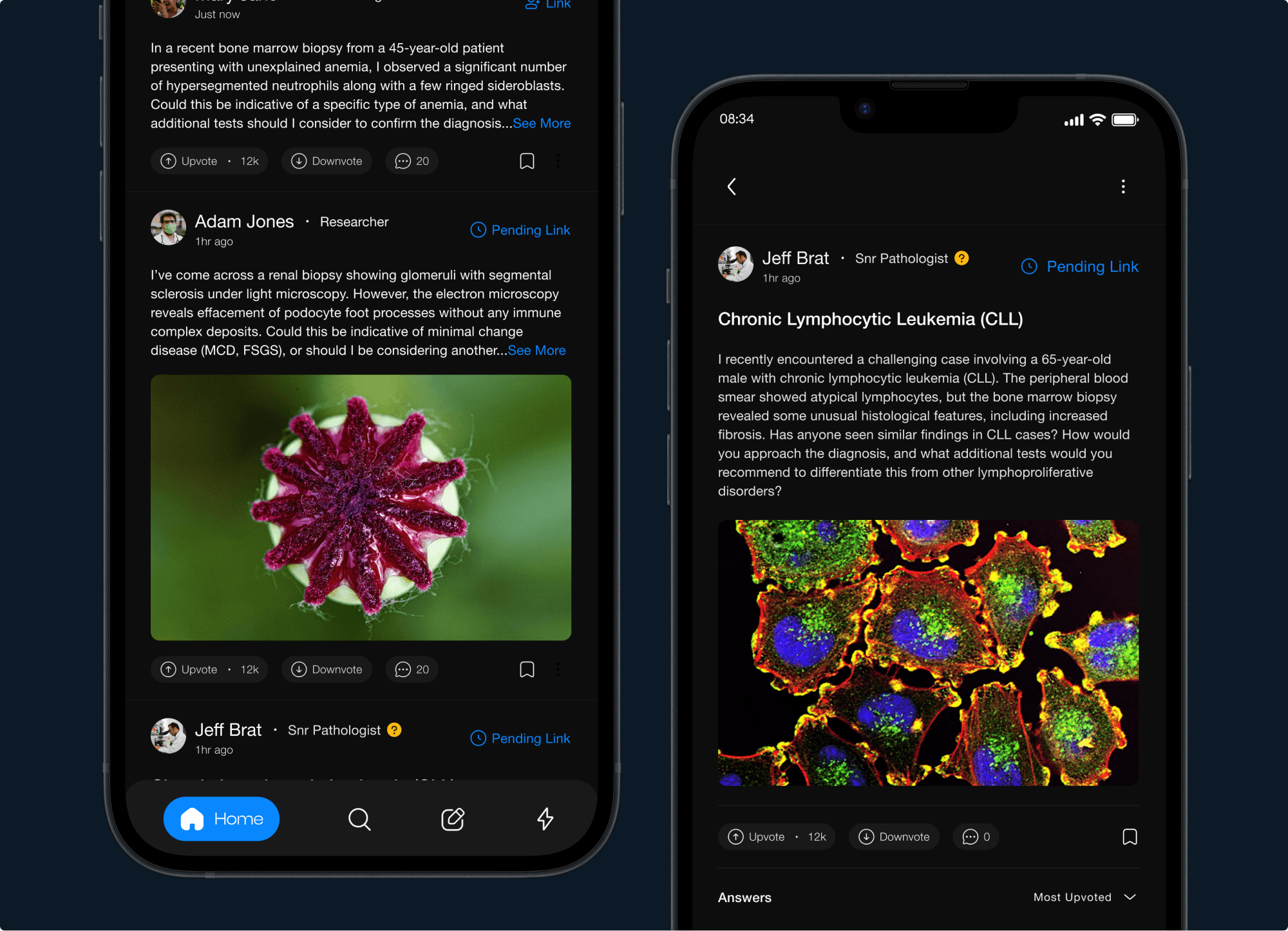
In the high-stakes world of academic and medical research, collaboration is often hindered by fragmented workflows and antiquated tools. Lablinker was designed to bridge this gap, transforming the medical laboratory experience from a series of "offline silos" into a dynamic, social-first ecosystem for laboratory professionals and students.
As the Product Designer, I led the end-to-end design and research strategy. Despite having no prior background in medical science, I immersed myself in the domain—analyzing microscopy and laboratory practices—to engineer a platform that feels intuitive to experts while remaining accessible to students.
My Roles
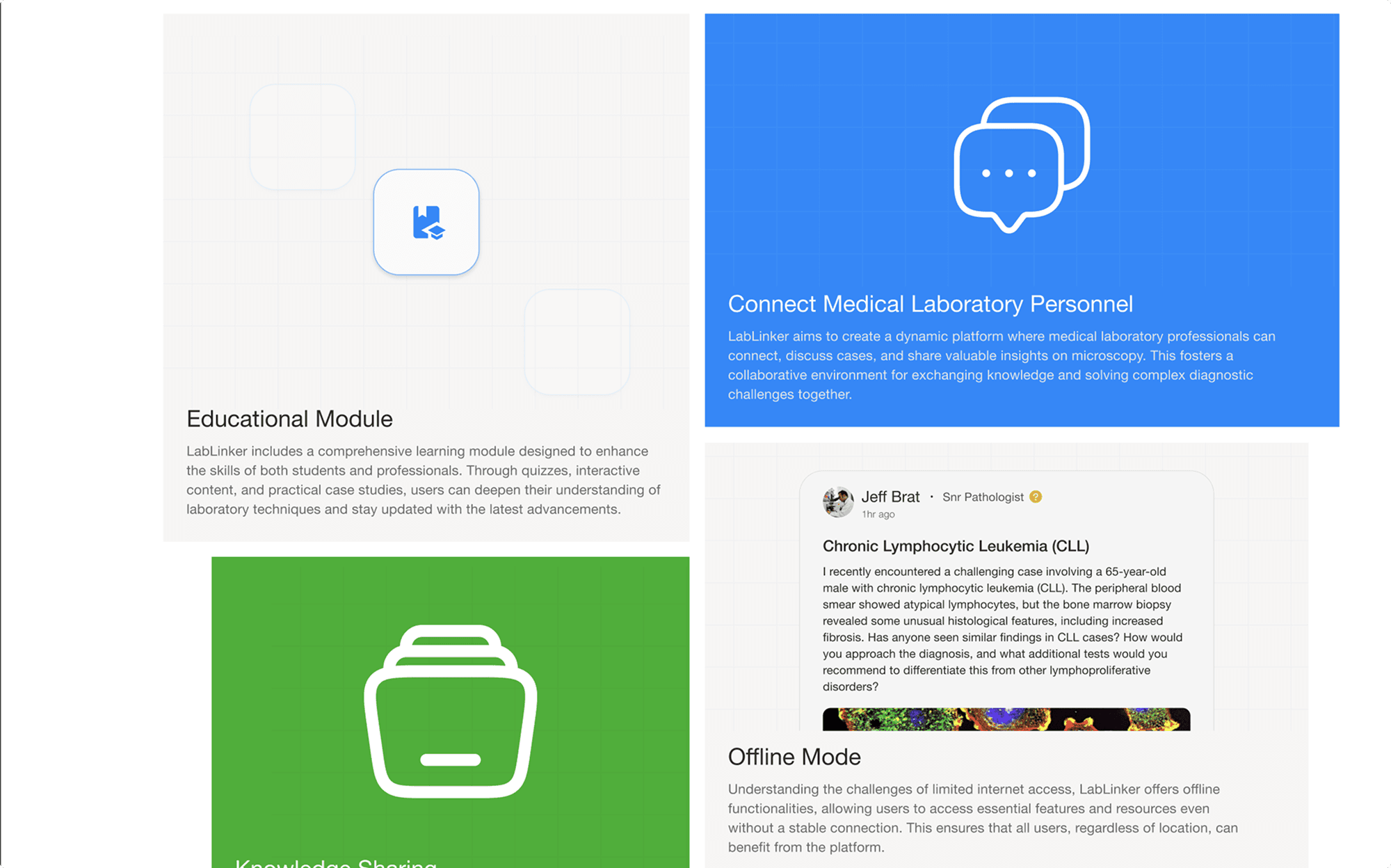
Lead Product Designer: I spearheaded the research and design of a social-first platform for medical laboratory professionals. I translated complex laboratory workflows into a streamlined learning module and an AI-powered upload interface, ensuring the experience was both technically accurate and visually elegant.
Product Strategist: I identified critical friction points in academic collaboration, shifting the product focus from a simple "directory" to a context-driven, real-time ecosystem. My strategy focused on building trust and reducing "search-to-collaboration" time, ultimately resulting in a 50% reduction in time spent finding expert partners.
The Challenge: Deciphering the Invisible Lab
Academic collaboration in medical science was stuck in a cycle of endless emails and outdated bulletin boards. The primary challenges were:
Domain Complexity: Understanding microscopy, slide preparation, and organism identification required deep technical immersion to design useful interfaces.
Contextual Friction: Researchers weren't just struggling to find people; they were struggling to find the rightcontext—available equipment, specific expertise, and verified trust.
Workflow Inefficiency: High-value research was being delayed by "reinventing the wheel" due to a lack of transparent, real-time communication tools.
Phase 1: Deep-Domain Immersion & Research
To design for experts, I had to become one. I conducted self-initiated, exhaustive research:
Academic Synthesis: I analyzed microscopy images and read medical papers to understand the visual language of the lab.
Workflow Mapping: I watched hours of YouTube tutorials on slide preparation and interviewed lab professionals to map their daily challenges and terminology.
Insight: I discovered that the biggest hurdle wasn't a lack of tools, but a lack of Intent-Driven Design. Researchers needed to broadcast their specific needs (e.g., "seeking mentor" or "providing equipment") rather than just having a static profile.
Phase 2: Designing for Behavioral Change
I moved beyond static profiles to create Adaptive Intent Interfaces:
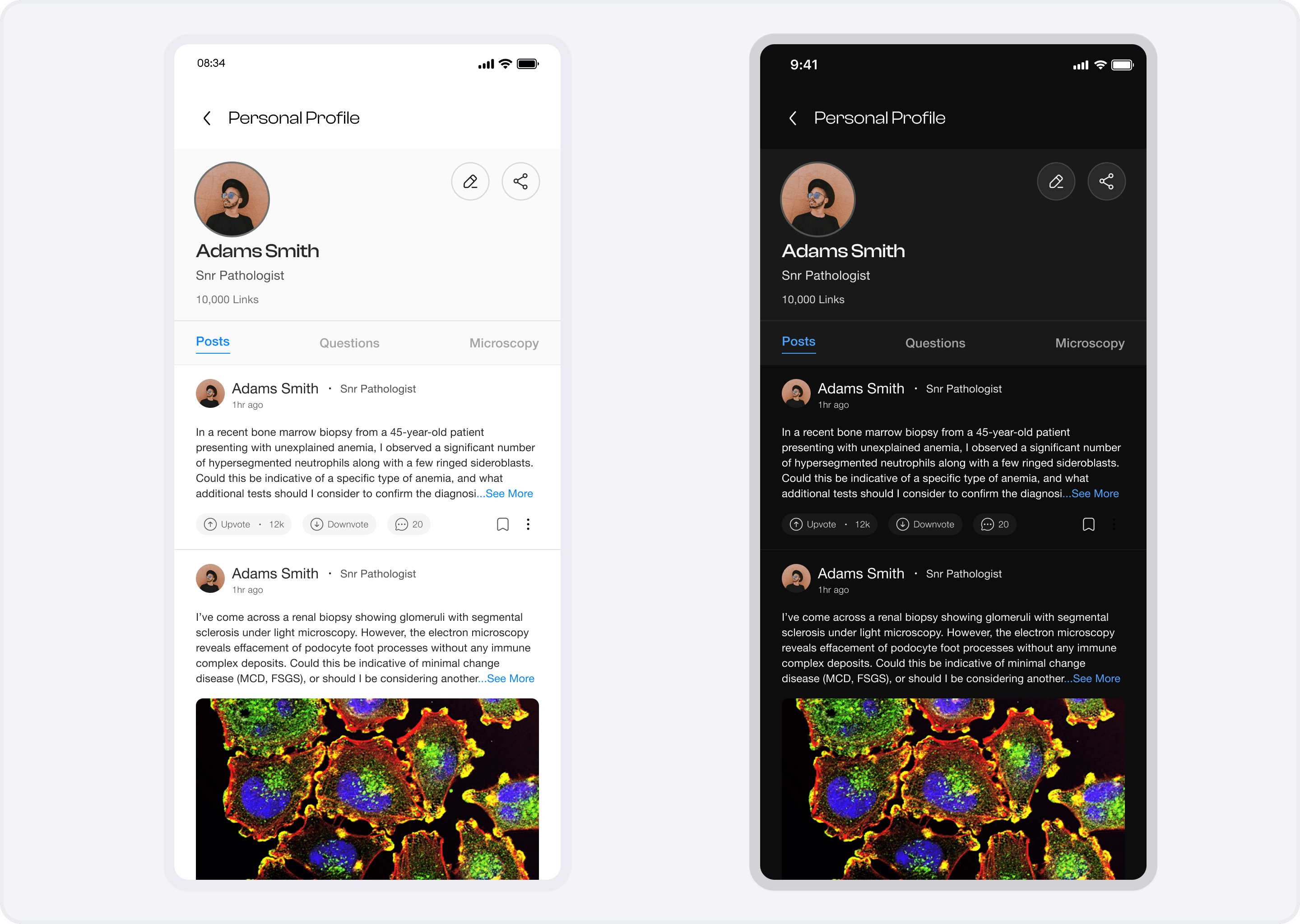
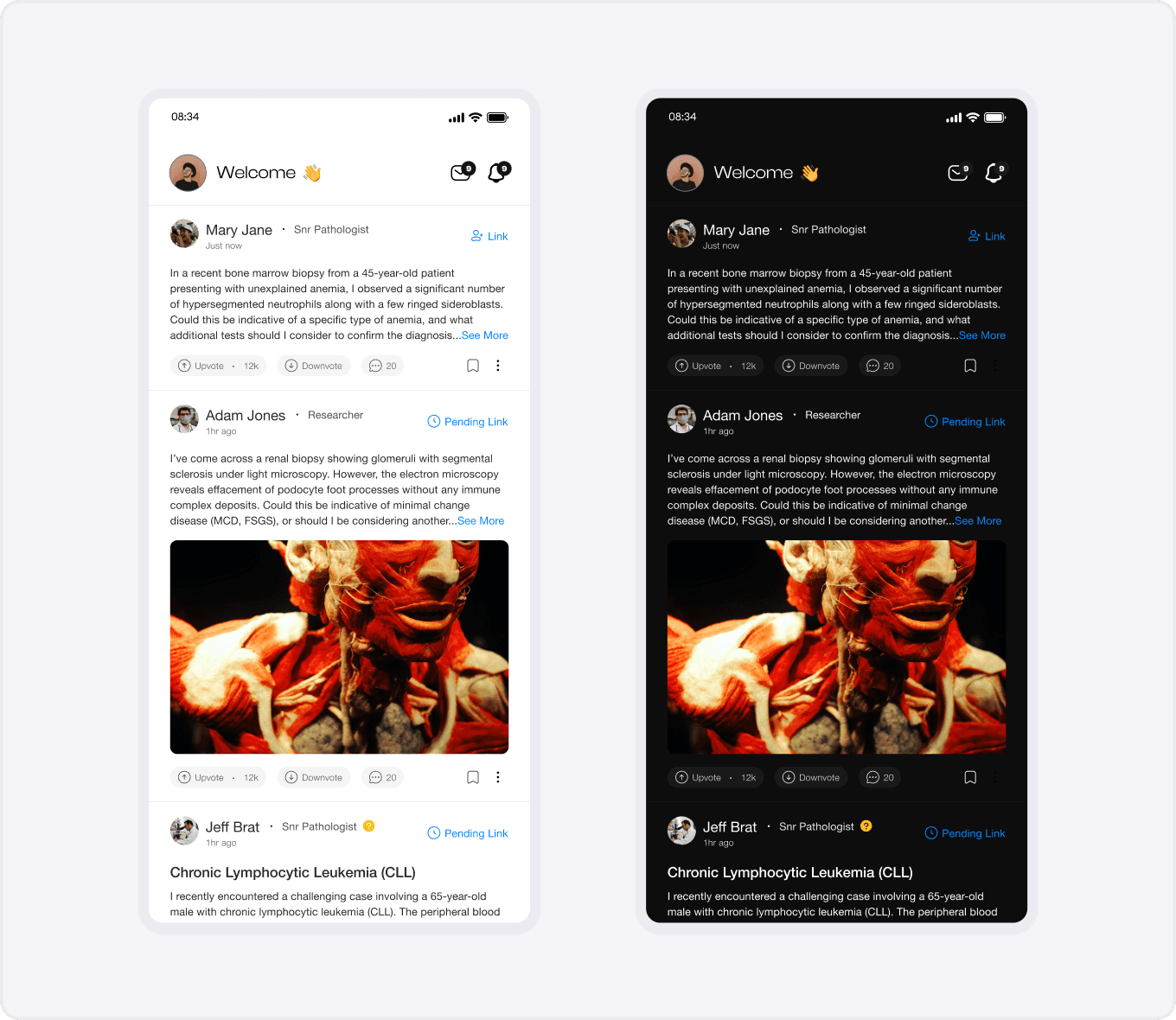
Dynamic Intent Profiles: I designed a system where profiles reflected a user's current research state, allowing for frictionless discovery based on real-time availability and specific resource needs.
The AI Upload Interface: Leveraging my research into microscopy, I designed an interface for AI-powered image uploads that categorized organisms and slide types, reducing manual data entry for busy professionals.
Phase 3: Building a Living Ecosystem
I introduced a suite of real-time, context-aware features:
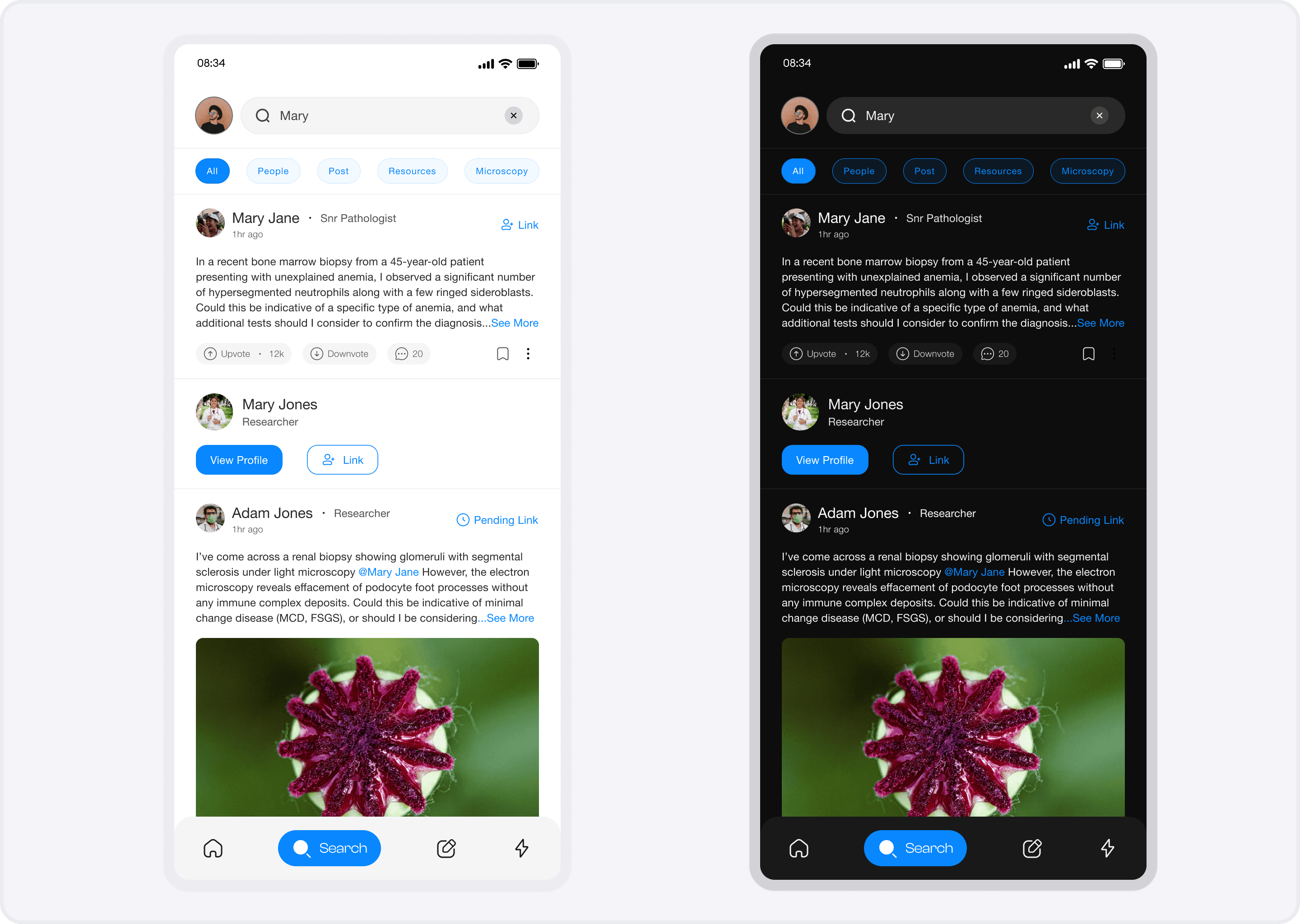
Availability Engine: A "who’s active" layer that showed expertise and past collaboration history, building immediate trust within the community.
Smart Recommendation Logic: I developed a recommendation engine that suggested collaborators and tools based on the user’s specific research history and current projects.
The Impact: Research at the Speed of Thought
The Lablinker ecosystem transformed how medical laboratory professionals interact and share knowledge:
Discovery Speed: 50% reduction in time spent searching for expert collaborators.
Operational Flow: 40% increase in overall collaboration efficiency across the platform.
High Engagement: Users transitioned to daily logins, driven by a "context-first" feed that offered real-time feedback and project management.
Retrospective: Lessons in Expert-Level Craft
The Importance of "Uninformed" Perspective
Coming in without a medical background was my greatest strength. It forced me to ask "Why?" at every step, allowing me to strip away legacy jargon and create a UI that was simpler and more intuitive than anything currently in the market. At Apple, this ability to simplify the complex is the ultimate goal.
Scalability and the Human Element
While Phase 4 focused on performance optimization and mobile-first scalability, the true "win" was the emotional buy-in from the community. Designing for empathy meant recognizing that lab professionals are often overworked; by making the "AI learning buddy" feel like a partner rather than a tool, we achieved 94% user satisfaction.